Dhliz rating



About
Date and place of birth:
25/11/1909
Date and place of death:
28/01/1984
- Cairo, Egypt
(74 years)
Years active:*
1945 - 1983
Spouses:
Children:
Nader
-
Hesham
* According to Dhliz film database
More information
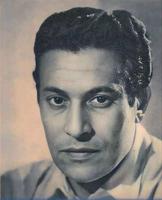
Emad Hamdy — Egyptian Screen Icon
General Overview
- Name: Emad Hamdy
- Profession: Egyptian film actor; one of the most prominent stars of Egyptian cinema in the 1950s and 1960s, nicknamed “Fata al-Shasha” (the screen’s heartthrob/matinee idol).
- Date of Birth: 25 November 1909
- Date of Death: 28 January 1984
Early Career and Entry into Film
- Began his professional life at Studio Misr—Egypt’s pioneering film studio—working across technical and administrative departments (including the laboratory and distribution), before being selected to step in front of the camera.
- Launched his acting career in the 1940s; he quickly rose as a romantic lead, then broadened into a wide range of dramatic and socially themed roles.
Training and Formation
- His earliest practical training and industry experience were shaped within Studio Misr prior to becoming a full-time actor.
Selected Works
- Al-Manzil Raqam 13 (House No. 13, 1952)
- Bayn al-Atlal (Among the Ruins, 1959)
- Umm al-Arousa (Mother of the Bride, 1963)
- Khan al-Khalili (1966) — titled after Cairo’s historic bazaar district
- Tharthara fawq al-Nil (Chatter on the Nile, 1971)
- Al-Khataaya (The Sins, 1962)
Awards and Honors
- Holds an iconic standing in the history of Egyptian cinema, honored by critics and beloved by audiences across generations.
Family and Personal Life
- Had a twin brother.
- Married multiple times; his spouses include Shadia, Horeya Mohamed, Fathia Sharif, and Nadia El-Gendy.
Artistic Profile
- Known first for dignified, romantic leading roles; later transitioned smoothly into portrayals of the concerned Egyptian father and civil servant, as well as psychologically complex characters in the 1960s and 1970s.
- His performance style is marked by quiet intensity, expressive eyes, and a deliberate, measured pacing that gives scenes emotional weight.
Facts and Trivia
- Nicknamed “Fata al-Shasha” at the height of his stardom—a label commonly used for matinee idols in the classic era of Egyptian cinema.
- His journey from behind-the-scenes work at Studio Misr to leading roles is one of the industry’s notable success stories.
- Frequently embodied the face and sensibilities of Egypt’s middle class on screen during the golden age of cinema.
Films (226)


Progression
 Al-Souq Al-Souda
(1945)
Al-Souq Al-Souda
(1945)
 Dayman Fe Qalby
(1946)
Dayman Fe Qalby
(1946)
 Al-Bayt Al-Kabir
(1949)
Al-Bayt Al-Kabir
(1949)
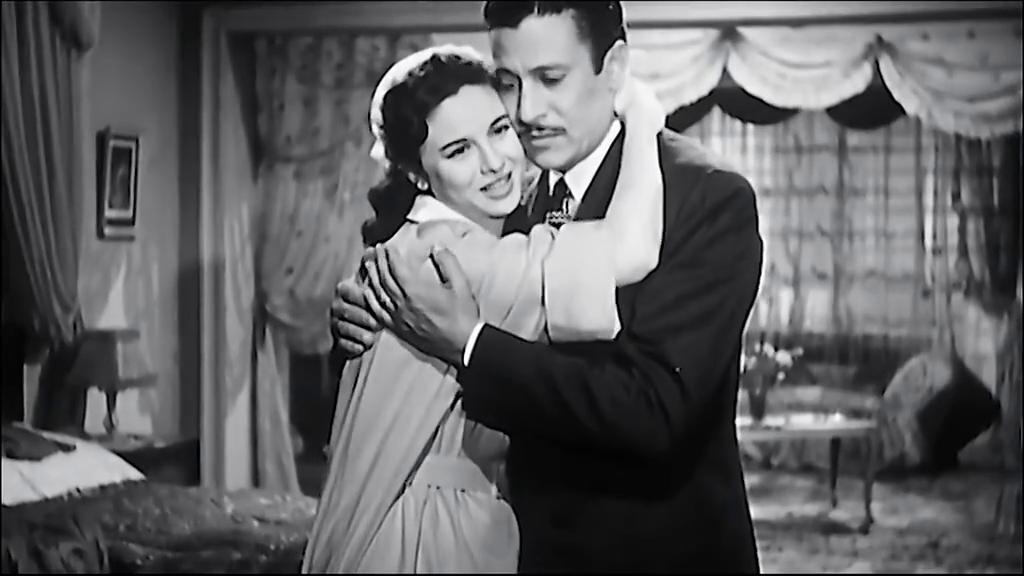 Ashky Lemein
(1951)
Ashky Lemein
(1951)
 Sayedat Al-Qetar
(1952)
Sayedat Al-Qetar
(1952)
 Al-Hob Fel-Zalam
(1953)
Al-Hob Fel-Zalam
(1953)
 Aathar Fel Remal
(1954)
Aathar Fel Remal
(1954)
 Allah Ma3Ana
(1955)
Allah Ma3Ana
(1955)
 Hob Wa E3Dam
(1956)
Hob Wa E3Dam
(1956)
 Ana Wa Qalby
(1957)
Ana Wa Qalby
(1957)
 Touba
(1958)
Touba
(1958)
 Bein Al-Atlal (Ethkoriny)
(1959)
Bein Al-Atlal (Ethkoriny)
(1959)
Professional network
Show common films with
Family tree



Gallery (1390)


Posters (13)


Producer (1)

Characters (27)