
About
Date and place of birth:
08/02/1931
Date and place of death:
28/11/2017
Years active:*
1947 - 1984
Spouses:
Emad Hamdy
-
Aziz Fathy
-
Salah Zulfikar
Relatives:
* According to Dhliz film database
More information
Shadia — Biography
Profile
- Birth Name: Fatima Ahmed Kamal Shaker
- Stage Name: Shadia
- Profession: Actress and Singer
- Date of Birth: 8 February 1931
- Place of Birth: Abdeen District, Cairo, Egypt
- Date of Death: 28 November 2017
- Nationality: Egyptian
- Years Active: 1947–1984
- Nicknames: The Darling of Egyptian Cinema; The Girl of the Arab Screen
- Note: “Darling” (originally “dalou'a”) is a popular term in Egyptian culture for a playful, charming sweetheart.
Early Life and Beginnings
- She grew up in an Egyptian family and received her basic education in Cairo.
- Entered the film industry in the late 1940s after studio auditions, immediately attracting attention with her warm voice and effortless screen presence.
- Made her screen debut in 1947 and quickly rose to leading roles, often combining acting and singing within the same film—then a hallmark of Egyptian cinema.
Artistic Career
- Cinema: Appeared in over 110 films spanning comedy, romance, and social drama. She was celebrated for moving seamlessly from lighthearted ingénues to layered, dramatic characters.
- Singing: Built a cherished repertoire of romantic and patriotic songs, known for melodic simplicity and sincere, emotive delivery—qualities that helped her music resonate across Egypt and the Arab world.
- Stage: Delivered a standout theatrical performance in the 1980s with the play “Rayya and Sakina,” a milestone in her career.
- Retirement: Announced her retirement from the arts in 1984 and stepped away from public life thereafter.
Selected Works
- Al-Mar'a al-Majhoula (The Unknown Woman, 1959)
- Shay' min al-Khawf (A Touch of Fear, 1969)
- Al-Liss wal-Kilab (The Thief and the Dogs, 1962)
- Zuqaq al-Midaqq (Midaq Alley, 1963)
- Nahnu La Nazra' al-Shawk (We Do Not Sow Thorns, 1970)
- Mirati Modir 'Amm (My Wife Is a General Manager, 1966)
- Karamat Zawjati (My Wife’s Dignity, 1967)
- Afrit Mirati (My Wife’s Devil, 1968)
- Al-Zawja 13 (Wife No. 13, 1962)
- Ma'budat al-Jamahir (Idol of the Masses, 1967)
- La Tas'alni Man Ana (Don't Ask Me Who I Am, 1984)
- Stage: Rayya and Sakina
Signature Songs
- Ya Habibti Ya Masr (My Beloved Egypt) — a patriotic anthem closely tied to national sentiment
- Qulu li 'Ain al-Shams (Tell the Sun) — a classic romantic plea
- Wehyat 'Eneik (I Swear by Your Eyes) — a vow of love using a common Arabic idiom
- Ya Dabla al-Khutuba (O Engagement Ring) — celebrating engagement customs
- Khud Bi Idi (Take My Hand) — a tender call for guidance and support
Personal Life
- Married multiple times and did not have children.
- Known for a private, low-profile lifestyle, especially after retirement.
Awards and Honors
- Widely honored for her body of work across Egypt and the Arab world—both during her lifetime and posthumously.
Titles and Artistic Legacy
- A defining icon of the Golden Age of Egyptian cinema (mid-20th century), brilliantly uniting acting and singing in popular, yet refined, entertainment.
- Her roles and songs became benchmarks of Arab popular culture, with patriotic pieces entering the collective memory.
- Influenced generations of actresses and singers through her versatile choices and commitment to audience taste.
Facts and Anecdotes
- Dubbed “The Darling of Egyptian Cinema” for her early roles as a lively, charming heroine.
- Praised for the rare ability to balance acting and singing within the same film without one overshadowing the other.
- Maintained a long absence from media appearances after retirement, which deepened the aura of privacy around her life story.
Films (112)


Progression
 Sa7Eba3T Al-Malaleem
(1949)
Sa7Eba3T Al-Malaleem
(1949)
 Ayam Shababy
(1950)
Ayam Shababy
(1950)
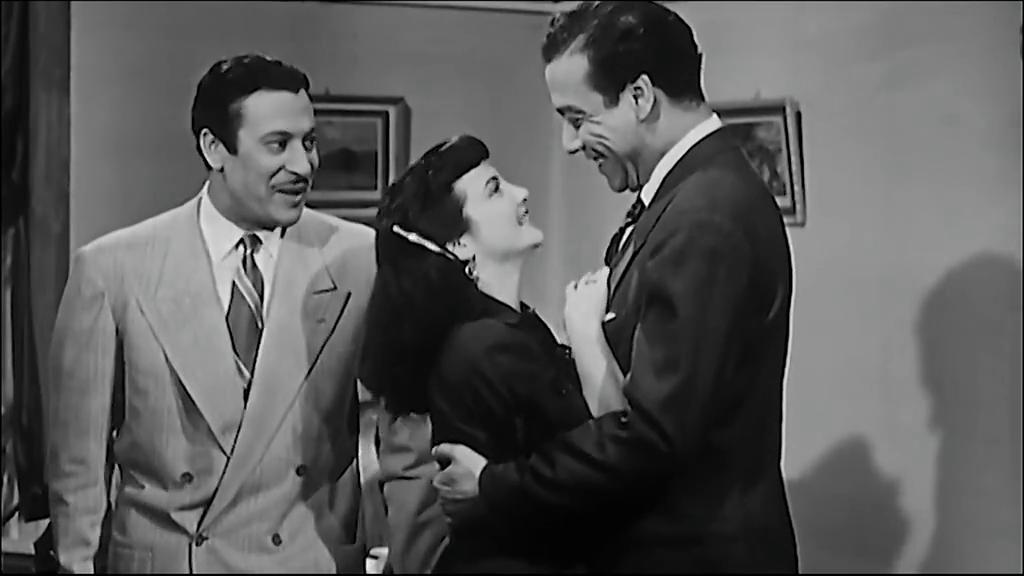 Ashky Lemein
(1951)
Ashky Lemein
(1951)
 Aamal
(1952)
Aamal
(1952)
 Eshhadou Ya Nas
(1953)
Eshhadou Ya Nas
(1953)
 Ana Al-Hob
(1954)
Ana Al-Hob
(1954)
 Daleela
(1956)
Daleela
(1956)
 Enta Habeeby
(1957)
Enta Habeeby
(1957)
 Al-Hareba
(1958)
Al-Hareba
(1958)
 Er7Am Hobby
(1959)
Er7Am Hobby
(1959)
 Law3At Al-Hob
(1960)
Law3At Al-Hob
(1960)
 Emra2A Fe Dawwama
(1962)
Emra2A Fe Dawwama
(1962)
Professional network
Show common films with
Family tree



Gallery (2644)




Posters (38)


Other activities (1)
Characters (23)