Dhliz rating




About
Date and place of birth:
15/04/1905
- Cairo, Egypt
Date and place of death:
08/03/1964
Years active:*
1935 - 1962
* According to Dhliz film database
More information
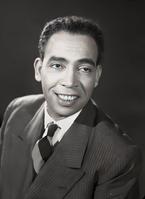
Abdel Fattah al-Qasri
- Name: Abdel Fattah al-Qasri
- Profession: Egyptian stage and film comic actor
- Born: 15 April 1905 — Cairo, Egypt
- Died: 8 March 1964 — Cairo, Egypt
- Active years: From the 1920s through the early 1960s
Early Life and Education
- He grew up in Cairo and received his basic education there.
Entry into the Arts and Career
- He began on the theater stage in the 1920s, then moved into cinema as Egypt’s film industry expanded in the 1930s.
- He became famous for playing the “mu'allim” — the neighborhood boss, café owner, or combative merchant — a popular archetype in Egyptian urban culture known for swagger and streetwise authority. His performances blended a sardonic Cairene accent, strong physical presence, and sharp verbal comedy.
- He is remembered for one-liners and catchphrases that turned into everyday sayings, most notably: “Ya ard, it-haddi, ma 'alayki qaddi” — roughly, “O earth, be still; there’s no one as formidable as me.”
- In later years, health problems affected his eyesight, gradually forcing him to step away from work before his death.
Key Films
- Italicized titles are the original names; English glosses are provided for clarity.
- Lend Me Three Pounds (Salfini Talata Gineh, 1939)
- Si Omar (1941)
- The Lady’s Game (Le'bat al-Set, 1946)
- Abu Helmous (1947)
- The Barber of Baghdad (Hallaq Baghdad, 1949)
- The Wedding Night (Laylat al-Dukhla, 1950)
- My Mother-in-Law, the Atomic Bomb (Hamati Qanbala Zariyya, 1951)
- Ibn Hamido (1957)
- Sugar Lady (Sukkar Hanem, 1960)
Artistic Style and Influence
- A master of popular comedy built on disciplined improvisation, playful language, and vivid physical presence.
- He shaped the comic image of the “mu'allim” on stage and screen, and his lines remain part of Egypt’s collective memory.
Personal Life and Death
- He suffered vision-related health issues beginning around the late 1950s and died in Cairo on 8 March 1964 at the age of 58.
Facts and Anecdotes
- He had a mild strabismus (a slight squint), which became a signature part of his comic persona on screen.
- For many years, he was the go-to choice for “mu'allim” roles thanks to his authentic command of the popular urban milieu — its language, gestures, and rhythms.
Films (87)



Progression
 Shay2 Men La Shay2
(1938)
Shay2 Men La Shay2
(1938)
 Sy 3Omar
(1941)
Sy 3Omar
(1941)
 Law Kont Ghany
(1942)
Law Kont Ghany
(1942)
 Shohada2 Al-Gharam
(1944)
Shohada2 Al-Gharam
(1944)
 Laylat Al-Gom3A
(1945)
Laylat Al-Gom3A
(1945)
 Magd... Wa Domou3
(1946)
Magd... Wa Domou3
(1946)
 Ben Al-M3Allem
(1947)
Ben Al-M3Allem
(1947)
 Talaq So3Ad Hanem
(1948)
Talaq So3Ad Hanem
(1948)
 3Oqbal Al-Bakary
(1949)
3Oqbal Al-Bakary
(1949)
 Ma3Lesh Ya Zahr..!
(1950)
Ma3Lesh Ya Zahr..!
(1950)
 Al-Sabr Gameel
(1951)
Al-Sabr Gameel
(1951)
 3Ashra Balady
(1952)
3Ashra Balady
(1952)
Professional network
Show common films with
Family tree
See Also


Gallery (987)


Posters (2)