Dhliz rating




About
Date and place of birth:
06/09/1927
Date and place of death:
16/09/2006
- Zamalek, Cairo, Egypt
(79 years)
Years active:*
1952 - 1998
Spouses:
Relatives:
Safia Al-Muhandess
-
Omar Fouad Al-Mohandes
* According to Dhliz film database
More information
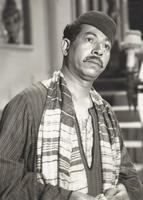
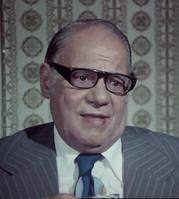
Biography: Fouad Zaki El-Mohandes
- Name: Fouad Zaki El-Mohandes
- Born: 6 September 1927
- Birthplace: Cairo, Egypt
- Died: 16 September 2006 (Cairo, Egypt)
- Occupation: Stage, film, and radio actor; comedian; radio host
- Popular epithets: El-Ustaz (“The Professor,” a respectful honorific), El-Mohandes (“The Engineer”—also his family name)
Early Life and Education
- Raised in a home that prized classical Arabic and literature; his father, Zaki El-Mohandes, was a prominent Arabic-language scholar.
- Graduated from the Faculty of Commerce, Cairo University.
- Began acting in university theater and turned his passion into a lifelong profession.
Entry into the Arts and Career
- Launched his career in the 1950s through radio and theater; his voice and sly wit stood out in comedic radio segments.
- Hosted the landmark radio program “Kelmteen w Bass” (“Just Two Words”), a light, sharp form of social critique that ran for many years and became a cultural touchstone.
- Established himself as a star of refined, family-friendly comedy on stage and screen, relying on linguistic agility, situational humor, and the precise, short punchline (Egyptian colloquial: “effeh” — a memorable comic catchphrase).
Selected Works
- Films (examples):
- Akhtar Ragol fi al-'Alam (1967) — “The Most Dangerous Man in the World”
- 'Awdat Akhtar Ragol fi al-'Alam — “Return of the Most Dangerous Man in the World”
- Shanbo fi al-Masayda (1968) — “Shanbo in the Trap”
- Ard al-Nifaq (1968) — “Land of Hypocrisy”
-
Saffah al-Nisa (1970) — “Women’s Killer”
-
Major Stage Plays:
- Ana wa Huwa wa Hiya — “Me, Him, and Her”
- Hawa' al-Sa'a 12 — “Eve at Twelve O’Clock”
- Sayyidati al-Gamila — “My Fair Lady” (Egyptian stage adaptation)
- Sikk 'Ala Banatak — “Lock Up Your Daughters”
- 'Alashan Khatir 'Ayonak — “For Your Beautiful Eyes”
-
Innaha Haqqan 'A'ila Muhtarama — “It Really Is a Respectable Family”
-
Radio and Television:
- Radio program: Kelmteen w Bass — “Just Two Words” (short-form social satire)
- Fawazeer 'Amo Fouad — “Uncle Fouad’s Riddles,” a popular Ramadan variety-riddle show (Fawazeer are televised musical riddle shows traditionally aired during Ramadan)
Personal Life
- Married twice; had two sons from his first marriage (Ahmed and Mohamed).
- His sister, Safia El-Mohandes, was a pioneering figure in Egyptian radio.
- Later married actress Shwikar (also spelled Shweikar); they divorced but maintained mutual respect and affection.
Style and Influence
- A master of elegant, “clean” comedy that blends crisp punchlines, clever situations, and precise language.
- Left a lasting mark on Egyptian theater and radio; his work remains a cornerstone of popular comedic memory.
Facts and Anecdotes
- Meticulous about diction and delivery, shaped by an upbringing steeped in classical Arabic.
- “Kelmteen w Bass” became a widely used phrase in Egypt for any short, pointed message of critique.
- One of the comedians most closely associated with the stage, sustaining a commanding presence in live theater for decades.
Films (77)


Progression
 Ka2S Al-3Athab
(1952)
Ka2S Al-3Athab
(1952)
 Bent Al-Giran
(1954)
Bent Al-Giran
(1954)
 Bein Al-Atlal (Ethkoriny)
(1959)
Bein Al-Atlal (Ethkoriny)
(1959)
 Hob Fe Hob
(1960)
Hob Fe Hob
(1960)
 Al-Telmeetha
(1961)
Al-Telmeetha
(1961)
 Al-Shomoo3 Al-Sawda2
(1962)
Al-Shomoo3 Al-Sawda2
(1962)
 Sa7Eb Al-Galala
(1963)
Sa7Eb Al-Galala
(1963)
 Hareb Men Al-Zawag
(1964)
Hareb Men Al-Zawag
(1964)
 Eqtelny Men Fadlak
(1965)
Eqtelny Men Fadlak
(1965)
 Zawga Men Baris
(1966)
Zawga Men Baris
(1966)
 Ma3Boudat Al-Gamaheer
(1967)
Ma3Boudat Al-Gamaheer
(1967)
 Motarda Gharameya
(1968)
Motarda Gharameya
(1968)
Professional network
Show common films with
Family tree



Gallery (697)


Posters (4)

Producer (1)

Characters (16)