Film trivia - page 95
Dhliz holds all sorts of details about hundreds of films, and more are added all the time. You can read through them here:
When Aida, Ahmed, and Aida and Ali’s Grandmother go to the cinema, we see a picture of the artist Mohamed Fawzi at the cinema entrance. He is known to have been married to the artist Madiha Yousry during the same period (the film's heroine).
The driver for Aida's family: Master Mohamed.
Ahmed's mother's name: Zakiya.
The title of the book Aida is reading: "Education.".
Ali lived in Europe for a period.
Ahmed joined the cavalry branch in the army.
The name of the prostitute in Aida's house: "Koko.".
Farid throws the leftover food he is eating in the Pharaonic temple! This is inappropriate socially and artistically, and shows no respect for the civilization or value of the place.
Mimi Shekib plays Farid’s Mother, despite being 3 years younger than him.
Serag Mounir plays Farid’s Father, even though the actual age difference between them is 6 years.

On one poster, several lines were written about the film: "The first story of its kind presented by the Egyptian screen" - "The first international Egyptian film featuring the star of cinema, theater and television and Miss France 1952 Claude Godard" - "The first film to feature the new Egyptian face and French stage star Gamil Rateb" - "Coming soon in Arabic, French and English in the largest theaters in the East and around the world.".
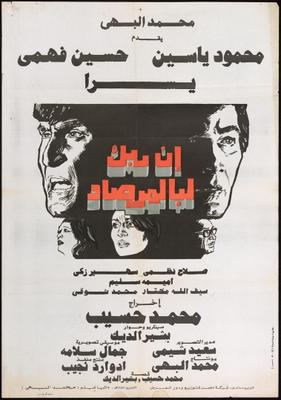
The film's title is taken from the Qur'anic verse: "Indeed, your Lord is ever watchful" (Surat Al-Fajr 14).
