Dhliz rating



About
Date and place of birth:
15/07/1904
Date and place of death:
13/09/1957
- Cairo, Egypt
(53 years)
Years active:*
1930 - 1958
Spouses:
Relatives:
* According to Dhliz film database
More information
Overview
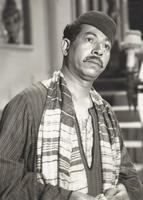
Siraj Munir was one of the defining faces of Egyptian cinema’s golden age. He became synonymous with the suave gentleman, the cultured villain, the impeccably mannered official, and the aristocratic figure. With a commanding screen presence, clear Arabic diction, and disciplined, precise performances, he built a career that stretched from the early 1930s to the late 1950s, appearing in dozens of films that established him as a pillar of acting in Egypt.
Personal Details
- Name: Siraj Munir
- Born: 15 July 1904 (Cairo, Egypt)
- Died: 13 September 1957 (Cairo, Egypt)
- Marital status: Married; had no children
Education and Early Years
- Educated at foreign-language schools in Cairo.
- Traveled to Germany in the late 1920s intending to study medicine, but was soon drawn to the performing arts.
- Upon returning to Egypt, he began on the stage with a major Cairo troupe, then transitioned to film with the advent of sound cinema (the “talkies”).
Career and Roles
- Noted for portraying the refined antagonist, senior civil servants, and pashas (Pasha: a high-ranking title from Egypt’s monarchical era), alongside serious social and romantic roles.
- Renowned for meticulous craft and for selecting roles that showcased authority, gravitas, and charisma.
- Remained a prominent presence throughout the 1940s and 1950s, the peak of Egyptian cinema’s studio-era output.
Key Works
- Amir al-Intiqam (Prince of Revenge, 1950)
- Inta Habibi (You Are My Love)
- Banat al-Yawm (Girls of Today)
- Tamr Henna
- Al-Wisada al-Khaliya (The Empty Pillow)
- Shabab Imra'a (A Woman’s Youth)
- Samara
Passing and Legacy
- He died in Cairo in 1957 following a sudden health crisis, at the height of his artistic powers.
- To this day, he stands as a model for portraying strong, dignified characters—a lasting imprint on the history of Egyptian acting.
Films (125)


Progression
 Sy 3Omar
(1941)
Sy 3Omar
(1941)
 Al-Bo2Sa2
(1943)
Al-Bo2Sa2
(1943)
 7Anan
(1944)
7Anan
(1944)
 3Antar Wa 3Abla
(1945)
3Antar Wa 3Abla
(1945)
 Sham3A Ta7Tareq
(1946)
Sham3A Ta7Tareq
(1946)
 Darbat Al-Qadar
(1947)
Darbat Al-Qadar
(1947)
 Moghamarat 3Antar Wa 3Abla
(1948)
Moghamarat 3Antar Wa 3Abla
(1948)
 Bayoumy Effendi
(1949)
Bayoumy Effendi
(1949)
 Amir Al-Enteqam
(1950)
Amir Al-Enteqam
(1950)
 Al-Banat Sharbat
(1951)
Al-Banat Sharbat
(1951)
 Bent Al-Shate2
(1952)
Bent Al-Shate2
(1952)
 Eshhadou Ya Nas
(1953)
Eshhadou Ya Nas
(1953)
 Er7Am Domoo3Y
(1954)
Er7Am Domoo3Y
(1954)
 Allah Ma3Ana
(1955)
Allah Ma3Ana
(1955)
 Shabab Emra2A
(1956)
Shabab Emra2A
(1956)
 Enta Habeeby
(1957)
Enta Habeeby
(1957)
Professional network
Show common films with
Family tree


Gallery (977)


Posters (4)


Producer (2)