Film trivia - page 58
Dhliz holds all sorts of details about hundreds of films, and more are added all the time. You can read through them here:
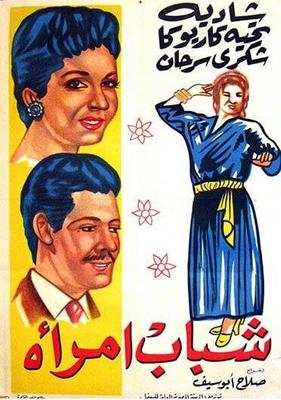
There is a nice, distinctive scene when Shafaat praises Imam's eyes and then covers them with her hands; in the very next shot, we see the mule turning the millstone with its eyes covered.
Shafaat's husband is dead.
Salwa is studying to become a music teacher.
Shoukry Sarhan plays a young man on the verge of university age (16–18), although he was about thirty when he acted in the film.
Imam lived in the Citadel.
Imam is from Hamoul, El-Batanoun district, Gharbia.
Imam's father had died.
At the beginning of the film, it says: "To every young man who leaves his family and country in pursuit of knowledge, and to every father who wants to secure a distinguished future for his son, we dedicate this film... so the first may know the pitfalls and avoid them, and the second may recognize the path of guidance and follow it.".

The second show, "The Rooster in the Coop", is a parody, and there is a strong similarity between it and the American animated film Chicken Run (2000), though the source of the idea is not clarified in the film credits. The heroes of both films are roosters; in the cartoon, the hero is mistakenly understood to be the savior who will rescue the chickens from captivity, while in the Egyptian film he is thought to be the absent savior. We see the same idea of a celebration held before the events escalate in both films. In the American film the hero escapes, while in the Egyptian one he is expelled after he is exposed. In the foreign film, the hero's truth is also discovered through part of a paper revealing his previous job, while in the Egyptian film he is exposed through his personal papers. The other characters' frustration after the hero leaves appears in both films, as does the hero's return when events escalate. The heroes in the American film want to rebel against the farm owner, while in the Egyptian film the enemy is other animals taking the farm's bounty. In the end, the heroes in the American film succeed in striking the farm owner, and the same happens in the Egyptian film with the enemies. This is followed by a romantic pairing between the rooster and the hen in both films.

The idea of the first show, "War of the Planets", is clearly a satirical inspiration from the American Star Wars film series.
Fekreya's taxi number: 2573.
