Dhliz rating



About
Date and place of birth:
13/03/1925
Date and place of death:
19/03/1997
- Cairo, Egypt
(72 years)
Years active:*
1949 - 1991
Spouses:
Hermine
-
Nariman Ouf
Children:
Salah
-
Yehia
Relatives:
* According to Dhliz film database
More information
About the Artist
- Full name: Mohamed Shoukry El-Husseiny Sarhan
- Date of birth: March 13, 1925
- Place of birth: Sharqia Governorate, Egypt
- Date of death: March 19, 1997
- Place of death: Cairo, Egypt
- Profession: Film, stage, and television actor
- Years active: Late 1940s through the 1980s
Early Life and Education
- He grew up in a conservative Egyptian household in Sharqia.
- He enrolled at the Higher Institute of Theatrical Arts (Acting), which gave him formal training in performance and theater history.
Entering the Arts
- He took his first steps on the stage before moving into cinema in the late 1940s.
- He rose to stardom early through leading roles, with a breakthrough in Ibn al-Nil (Son of the Nile, 1951), which established him as a central face of social drama.
Career and Distinctive Traits
- He was known for portraying the ordinary young man—rural characters and students—and excelled in psychologically complex tragic roles.
- A leading figure of social realism in the 1950s and 1960s, he delivered a wide range of performances spanning romance, literary adaptations, and socially themed dramas.
- Social realism: a cinematic approach that focuses on everyday life and social issues, often highlighting working-class experiences and moral dilemmas.
- His strong screen presence and restrained, inward style of acting helped him maintain his stature for decades.
Selected Works
- Ibn al-Nil (Son of the Nile, 1951)
- Shabab Imra'ah (A Woman’s Youth, 1956)
- Radd Qalbi (Return My Heart, 1957)
- Al-Liss wal-Kilab (The Thief and the Dogs, 1962)
- Al-Zawja al-Thaniya (The Second Wife, 1967)
Honors and Recognition
- He earned wide critical acclaim, and several of his films appear on lists of the most notable works in the history of Egyptian cinema.
Personal Life
- He married and maintained a stable family life away from the spotlight.
- Known for his moral and religious commitment, he gradually withdrew from media appearances in his later years.
Passing and Artistic Legacy
- He passed away on March 19, 1997, in Cairo.
- Considered a pillar of the 1950s–1960s generation, he left a significant body of films that helped define the contours of classical Egyptian cinema.
Films (157)


Progression
 Lahaleebo
(1949)
Lahaleebo
(1949)
 Afra7
(1950)
Afra7
(1950)
 Ibn Al-Niel
(1951)
Ibn Al-Niel
(1951)
 Ghadab Al-Waledayn
(1952)
Ghadab Al-Waledayn
(1952)
 Ba2E3At Al-Khobz
(1953)
Ba2E3At Al-Khobz
(1953)
 Er7Am Domoo3Y
(1954)
Er7Am Domoo3Y
(1954)
 Rannet Al-Kholkhal
(1955)
Rannet Al-Kholkhal
(1955)
 Zanouba
(1956)
Zanouba
(1956)
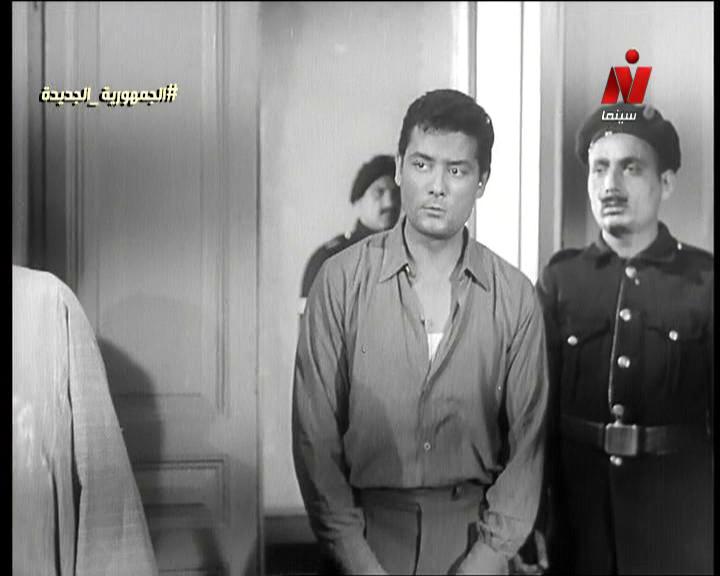 Al-Garima Wal-3Eqab
(1957)
Al-Garima Wal-3Eqab
(1957)
 A7Ebbak Ya 7Asan
(1958)
A7Ebbak Ya 7Asan
(1958)
 A7Lam Al-Banat
(1959)
A7Lam Al-Banat
(1959)
 Bein Edeik
(1960)
Bein Edeik
(1960)
Professional network
Show common films with
Family tree
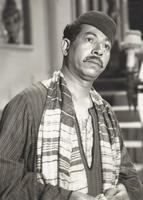


Gallery (1261)


Posters (5)


Characters (27)