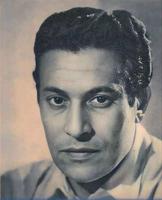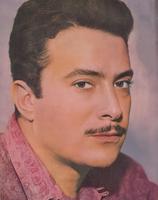
Youssef Shaaban
 100 films or more
 60 active years or more
About
Date and place of birth:
16/07/1931
Date and place of death:
28/02/2021
Years active:*
1961 - 2021
Spouses:
Seham Fathy
-
Laila Taher
-
Nadia Ismail Shherine
Children:
Sinaa
-
Ezz-Al-Din
-
Zeinab
-
Mourad
* According to Dhliz film database
More info
Youssef Shaaban Shehata
- Full name: Youssef Shaaban Shehata
- Born: 16 July 1931 — Cairo (Shubra district)
- Died: 28 February 2021 — Giza
- Occupation: Egyptian film, television, and stage actor
Early Life and Education
- Grew up in Shubra, a populous district of Cairo.
- Enrolled at the Faculty of Law, Ain Shams University, before switching to acting at the Higher Institute of Theatrical Arts, from which he graduated in the early 1960s.
Beginnings and Entry into the Arts
- Launched his professional career in the early 1960s through theatre and cinema.
- Quickly established a strong presence with roles spanning social dramas and literary adaptations, before becoming one of television drama’s most recognizable faces.
Career and Key Milestones
- Cinema:
- Built a substantial filmography from the early 1960s. Notable titles include:
- Zuqaq al-Midaq (Midaq Alley, 1963) — adapted from Naguib Mahfouz.
- Umm al-'Arousa (Mother of the Bride, 1963).
- Bayya' al-Jara'id (The Newspaper Seller, 1963).
- Al-Rajul alladhi Faqada Zillahu (The Man Who Lost His Shadow, 1968).
- Miramar (1969) — adapted from Naguib Mahfouz.
- Al-'Omr Lahza (Life Is but a Moment, 1978).
-
Note: The “literary adaptations” here refer to films based on major Arabic novels, especially by Nobel laureate Naguib Mahfouz.
-
Television:
-
Achieved wide popularity in TV drama. Among his best-known series:
- Ra'fat al-Haggan (1987–1990) — a landmark espionage series.
- Al-Shahd wal-Dumu' (The Honey and the Tears; both parts in the 1980s).
- Al-Watad (The Peg; mid-1990s).
-
Theatre:
-
Appeared on the National Theatre stage and in popular commercial productions.
-
Positions:
-
Served as President of the Egyptian Actors' Syndicate in the late 1990s and early 2000s (the professional union representing actors).
-
Academic Work:
- Taught at the Higher Institute of Theatrical Arts in Kuwait at various times.
Style and Traits
- Renowned for portraying dignified, complex characters, supported by a resonant voice that suited radio and television.
- Moved fluidly between romantic leads, social dramas, and portrayals of public or authoritative figures.
Awards and Honors
- Received multiple honors in Egyptian and Arab festivals for his body of work, with special recognition for his impact on television drama.
Personal Life
- Lived abroad at times for academic appointments before settling back in Egypt to continue his artistic career.
Passing and Legacy
- Passed away on 28 February 2021 due to complications from COVID-19.
- Remains a pillar of his generation in Egyptian drama, leaving a rich body of work that endures in the collective memory of Arab cinema and television.
Films (112)


Series (9)







Gallery (353)


User memes (15)


Professional network
Find common works with
Roles (15)



Gallery (353)
Posters (8)


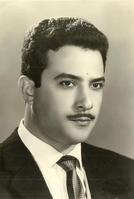
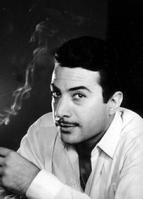
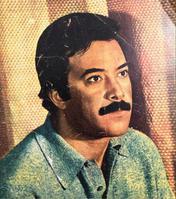


Through the years
 Fe Baytona Ragol
(1961)
Fe Baytona Ragol
(1961)
 Al-Mo3geza
(1962)
Al-Mo3geza
(1962)
 Om Al-3arousa
(1963)
Om Al-3arousa
(1963)
 Lelregal Faqat
(1964)
Lelregal Faqat
(1964)
 Ayam Da2e3a
(1965)
Ayam Da2e3a
(1965)
 Al-Asdeqa2 Al-Thalatha
(1966)
Al-Asdeqa2 Al-Thalatha
(1966)
 Ma3boudat Al-Gamaheer
(1967)
Ma3boudat Al-Gamaheer
(1967)
 Bent Men Al-Banat
(1968)
Bent Men Al-Banat
(1968)
 Abwab Al-Layl
(1969)
Abwab Al-Layl
(1969)
 Awham Al-Hob
(1970)
Awham Al-Hob
(1970)
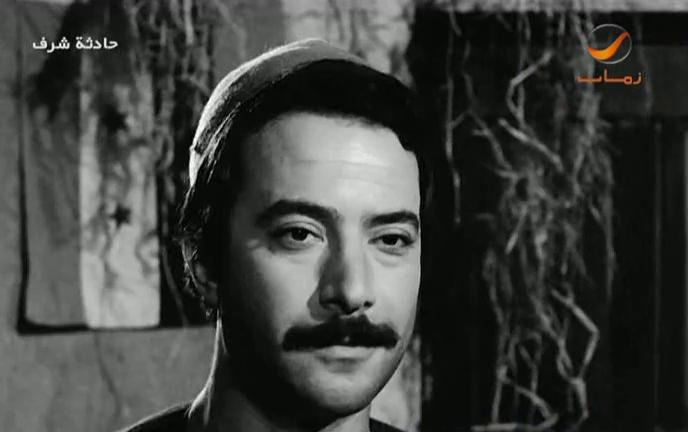 7adethat Sharaf
(1971)
7adethat Sharaf
(1971)
 Emra2a Saye2at Al-Som3a
(1973)
Emra2a Saye2at Al-Som3a
(1973)