
Dhliz rating



About
Date and place of birth:
15/09/1911
- Cairo, Egypt
Date and place of death:
14/02/1981
Years active:*
1941 - 1975
Children:
* According to Dhliz film database
More information
Biography
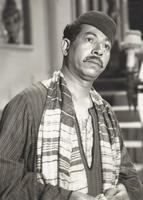
- A prominent Egyptian actor across stage, cinema, radio, and television, admired for a calm presence and precise, understated performances—especially in roles of fathers, rural clerks, and everyday popular characters.
- Date of birth: 15 September 1911
- Date of death: 14 February 1981
- Nationality: Egyptian
Family
- From an artistic family; father of the actor Nabil Nour El-Din.
Education and Early Career
- Began on the stage, then expanded into film, radio, and television. He gained widespread recognition for naturalistic acting, a distinct voice, and a warm, accessible Egyptian vernacular.
Career and Style
- Appeared in dozens of varied roles and excelled at portraying paternal figures, ordinary people, senior civil servants, and rural men, with meticulous attention to behavioral detail and disciplined diction.
- Considered one of the notable faces of Egypt’s modern theater movement, with a sustained presence in Egyptian drama over multiple decades.
Notable Works
- Merati Mudir 'Amm (My Wife, the Director General) — a classic social comedy about gender and power at work.
- al-Mumiya’ (The Night of Counting the Years) — a landmark art film by Shadi Abdel-Salam, centered on heritage and identity.
- Yawmiyat Na'ib fi al-Aryaf (Diary of a Country Prosecutor) — adapted from Tawfiq al-Hakim’s celebrated novel about justice in rural Egypt.
- Ma'budat al-Jamahir (The People’s Idol) — a musical romance associated with stars like 'Abd al-Halim Hafiz and Shadia.
- 'Adu al-Mar'a (Enemy of Women) — a social comedy-drama exploring relationships and gender dynamics.
- Stage: al-Sikka al-Salama — “The Safe Route,” a well-known play whose title suggests choosing the right path in life.
- Stage: al-Sabansah — a classic stage work; “al-Sabansah” is a colloquial term linked to railway work, evoking labor and hardship.
- Stage: al-Mahrousa — “The Protected,” an old epithet for Egypt often used in patriotic or historical contexts.
Films (122)


Progression
 Taqeyat Al-Ekhfa2
(1944)
Taqeyat Al-Ekhfa2
(1944)
 Laila Bent Al-Foqara2
(1945)
Laila Bent Al-Foqara2
(1945)
 Al-Khamsa Geneh
(1946)
Al-Khamsa Geneh
(1946)
 Moghamarat 3Antar Wa 3Abla
(1948)
Moghamarat 3Antar Wa 3Abla
(1948)
 Fatma Wa Marika Wa Rachel
(1949)
Fatma Wa Marika Wa Rachel
(1949)
 Ayam Shababy
(1950)
Ayam Shababy
(1950)
 Al-Sab3 Afandy
(1951)
Al-Sab3 Afandy
(1951)
 Al-Ostatha Fatma
(1952)
Al-Ostatha Fatma
(1952)
 Ba2E3At Al-Khobz
(1953)
Ba2E3At Al-Khobz
(1953)
 Qoloub Al-Nas
(1954)
Qoloub Al-Nas
(1954)
 Naharak Sa3Id
(1955)
Naharak Sa3Id
(1955)
 Ana Wa Qalby
(1957)
Ana Wa Qalby
(1957)
Professional network
Show common films with
Family tree



Gallery (332)


Posters (1)


