Dhliz rating



About
Date and place of birth:
08/10/1917
Date and place of death:
08/05/2002
Years active:*
1951 - 1995
Relatives:
* According to Dhliz film database
More information
Basic Information
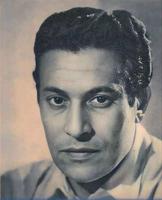
- Full name: Ahmed Mazhar
- Date of birth: October 8, 1917
- Place of birth: Cairo, Egypt
- Date of death: May 8, 2002
- Place of death: Cairo, Egypt
- Popular epithet: The Noble Knight
Early Life and Education
- Graduated from the Military Academy in 1938.
- Served in the Cavalry; he was among the most accomplished equestrians in the Egyptian army.
- Equestrianism refers to skilled horsemanship and riding—an ability that later shaped his on-screen persona.
Entry into the Arts
- Cinema drew him in during the mid-1950s. He was first cast thanks to his mastery of horsemanship and his aristocratic presence.
- After early successes, he turned professional and quickly became one of his generation’s leading stars in historical, romantic, and comedic roles.
Career Highlights
- His career spanned decades, during which he appeared in dozens of films and television works.
- He was known for his precise, classical Arabic diction, quiet charisma, and regal bearing—qualities that made him ideal for historical roles and aristocratic characters.
- His reputation rested on discipline and a careful, discerning approach to choosing roles.
Selected Works
- Radd Qalbi (Return My Heart, 1957)
- Jamila (Jamila, the Algerian, 1958)
- Al-Layali al-Dafi'a (Warm Nights, 1958)
- Du'a al-Karawan (The Nightingale’s Prayer, 1959)
- Gharam al-Asyad (Love of the Lords, 1960)
- Wa Islamah (Oh Islam!, 1961)
- Al-Aydi al-Na'ima (Soft Hands, 1963)
- Al-Nasir Salah al-Din (Saladin the Victorious, 1963)
- Dameer Abla Hekmat (TV series, 1991)
- Note: Titles are given in transliteration with widely known English titles in parentheses.
Contributions and Legacy
- His name was inseparably linked to horsemanship on and off screen, earning him the sobriquet “The Noble Knight.”
- He remains a defining figure of classical stardom in Egyptian cinema, leaving a lasting mark on historical, social, and romantic films.
Films (98)


Series (1)

Progression
 Zohour Al-Islam
(1951)
Zohour Al-Islam
(1951)
 Tariq Al-Amal
(1957)
Tariq Al-Amal
(1957)
 Ghariba
(1958)
Ghariba
(1958)
 Al-3Ataba Al-Khadra2
(1959)
Al-3Ataba Al-Khadra2
(1959)
 3Amaleqat Al-Be7Ar
(1960)
3Amaleqat Al-Be7Ar
(1960)
 Ma3 Al-Thekrayat!!!
(1961)
Ma3 Al-Thekrayat!!!
(1961)
 Ghosn Al-Zaytoun
(1962)
Ghosn Al-Zaytoun
(1962)
 Al-Naser Sala7 Al-Din
(1963)
Al-Naser Sala7 Al-Din
(1963)
 Al-3Enab Al-Morr
(1965)
Al-3Enab Al-Morr
(1965)
 Laylat Al-Zefaf
(1966)
Laylat Al-Zefaf
(1966)
 Mo3Askar Al-Banat
(1967)
Mo3Askar Al-Banat
(1967)
 Bent Men Al-Banat
(1968)
Bent Men Al-Banat
(1968)
Professional network
Show common films with
Family tree


Gallery (590)




Posters (2)

Screenwriter (5)


Characters (27)